The Comya Gardener: Gardening in South Carolina's Lowcountry
  • Welcome
  • About The Writer
  • Blog
  • Welcome
  • About The Writer
  • Blog

May

​

T

Shrubs for the Lowcountry-  Soaring and Savage or Sweet and Showy

2/23/2022

0 Comments

 
Shrubs are really not my thing, but they do need to be talked about.   They are the structural element in any landscaping and most Property Owner’s Associations require them around the foundation of our houses, to hide utilities,  and/or act as buffers between properties.  And therein, lies the issue.
 
I blame POA’s or HOA’s for a number of problems.  In their quest to make certain that very exacting regulations are met, they encourage landscapers to plant things that are a certain height and often totally inappropriate.    Landscapers, for their part, want to keep POA’s happy and also to keep their costs low.  This often results in a shrub or tree being wedged up to the foundation of the house that looks good now, but can grow to 30 feet tall – not an ideal foundation planting.
 

Picture
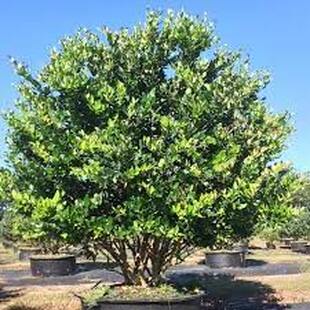
Viburnum odoratissimum - a monster shrub!
A favorite shrub to use is Viburnum odoratissimum or Sweet Viburnum.  This shrub grows extremely quickly and has lush green leaves and white flowers.  I do not find it “sweet” since it has a sharp odor.  I call it “stinky” Viburnum.  For the first year or two, this shrub nicely covers the foundation of a house, and then it takes off.  I had them along one side of my house and I was pruning them every few weeks.  They also are susceptible to white fly if they are wedged together with inadequate ventilation.  White fly leads to sooty mold fungus as the honey dew secreted by the fly larvae encourages black mold.  Yuck and double yuck.  If you remember,  I finally gave up and had them all dug up.  They never should have ben planted that close to the house and in an area that was deep shade.  On the other hand, Sweet Viburnum does make a great screen or buffer between properties if you wish privacy due to their fast growth rate and thick foliage.
 
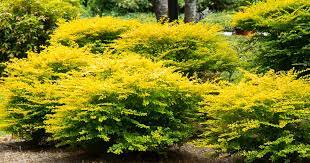
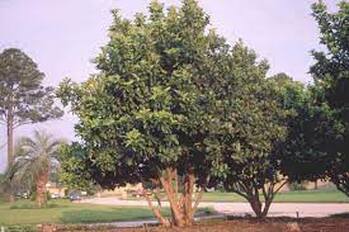
Many  landscapers love Ligustrums of all types.   Ligustrum japonicum  (Japanese privet) is very popular as it grows two feet per year.  Although it can reach 12 feet tall, it can be pruned to any height.  There is a variegated variety as well as a smaller variety called “Sunshine” Ligustrum with bright yellow leaves.
Warning- Japanese Ligustrum is on the invasive watch list for some parts of South Carolina, but not the Lowcountry -  yet.
 
Picture
Sunshine Ligustrum- a more manageable size shrub
Picture
Japanese Privet can become a tree
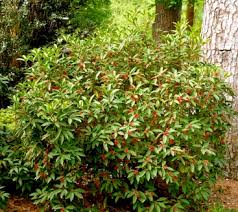
PictureFlorida anise - love this native shrub!
​There are so many attractive evergreen shubs that can be used in our area, why use the same two over and over again?  What can you use next to your foundation instead of the towering landscaper and POA friendly shrubs?  In shade, there are many types of Azaleas that do not grow out of control.  Florida anise (Illicium floridanum)  likes full shade and moist soil so they would do well in an area where water drains off the roof.   They can grow to 10 feet, but are slow growing and easy to keep trimmed.
 
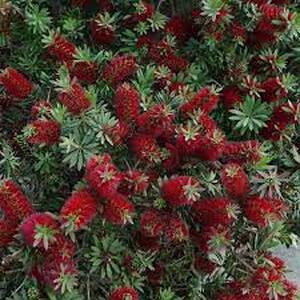
In sunny areas, there is my favorite – Dwarf Bottlebrush (Callistemon citrinus).  They are slow growing and stay tidy with little maintenance. The red brush like flowers are pollinator magnets and they are not prone to disease.  They will get about three-four feet tall and five feet wide – plant them about three feet from your foundation. In fact, make certain that there is air flow between any of your foundation shrubs and the house.  This will prevent all sorts of issues in the future.

Picture
Pollinators love Dwarf Bottlebrush
​Now about Azaleas!  They are getting ready to bloom soon.  The worst thing you or your landscaper can do is to prune them right now.   I saw a lovely Azalea hedge that had been totally scalped by a power hedge trimmer.  All of the blossom buds were cut off – no flowers this year.  Hand prune Azaleas after they are done blooming, but no later than July 4th.  Azaleas are acid loving shrubs so they like a taste of Hollytone or Miracid in the spring and fall.
Picture
I have not seen a Butch flat top haircut since the early 1960's and they certainly do not belong on Azaleas
PictureThis is what you do not want to see!
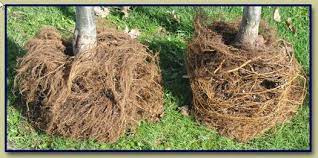
Although fall is the best time to plant shrubs, you can do it in the early spring before our heat sets in.  How do you plant shrubs? Pay attention.   This will be very different from what you may have been taught.  With both shrubs and perennials, it is important to take them out of the nursery container or, God forbid, burlap covering.   Wash all of the soil from the roots.   Nursery soil is usually some sort of growing medium and not the natural soil  that your plant will ultimately be growing in.  Look for circling roots.  If they are severely circled, it means that the plant was very pot bound.  Untangle and untwine those roots and soak them in a large bucket of water.  If you need to trim off some circling roots, that will be okay as long as you leave some good rootstock left.
 
Dig a hole twice as wide, but only as deep as the roots.   The plant should sit with the root flare from the trunk at the very surface of the soil.  You do not need to add any supplementary soil other than your own native soil.  You want that plant to get used to what it is going to be growing in and not just some yummy stuff.  That will cause those roots to curl around inside the hole and not spread outward.  The hole that you dig might look like a big bowl and that is just fine.   When placing the plant in the hole, make certain that the roots are fanned out like spokes on a wheel.   Fill in with your native soil and tamp gently.  Do not stomp around the trunk.  You will push the oxygen out of the soil.  Water thoroughly until the water puddles on top.  You may see little bubbles and that is great since it means that there is oxygen in the soil.  Keep watering every couple of days for two weeks and then twice a week until the plant gets established.

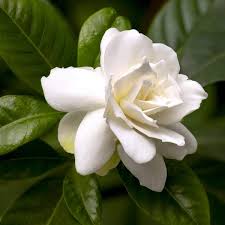
I will be back with more on our quintessential Southern shrubs – Azaleas, Gardenias, and Camellias.  None of them are native to our hemisphere, but they have become iconic symbols of spring in the South. 
 
Since I have a broken foot, I will be writing even more about gardening since I cannot be in my own garden until I get screwed back together again.  Then I will be hobbling around in a boot checking up on my little darlings as they sprout and bloom.  My tulips just opened this morning!
 
0 Comments


Leave a Reply.

    RSS Feed

Powered by Create your own unique website with customizable templates.